
What is query fan-out, and what can it teach us about writing for AI search?
Drafted and reviewed using AI assistance.
On this page
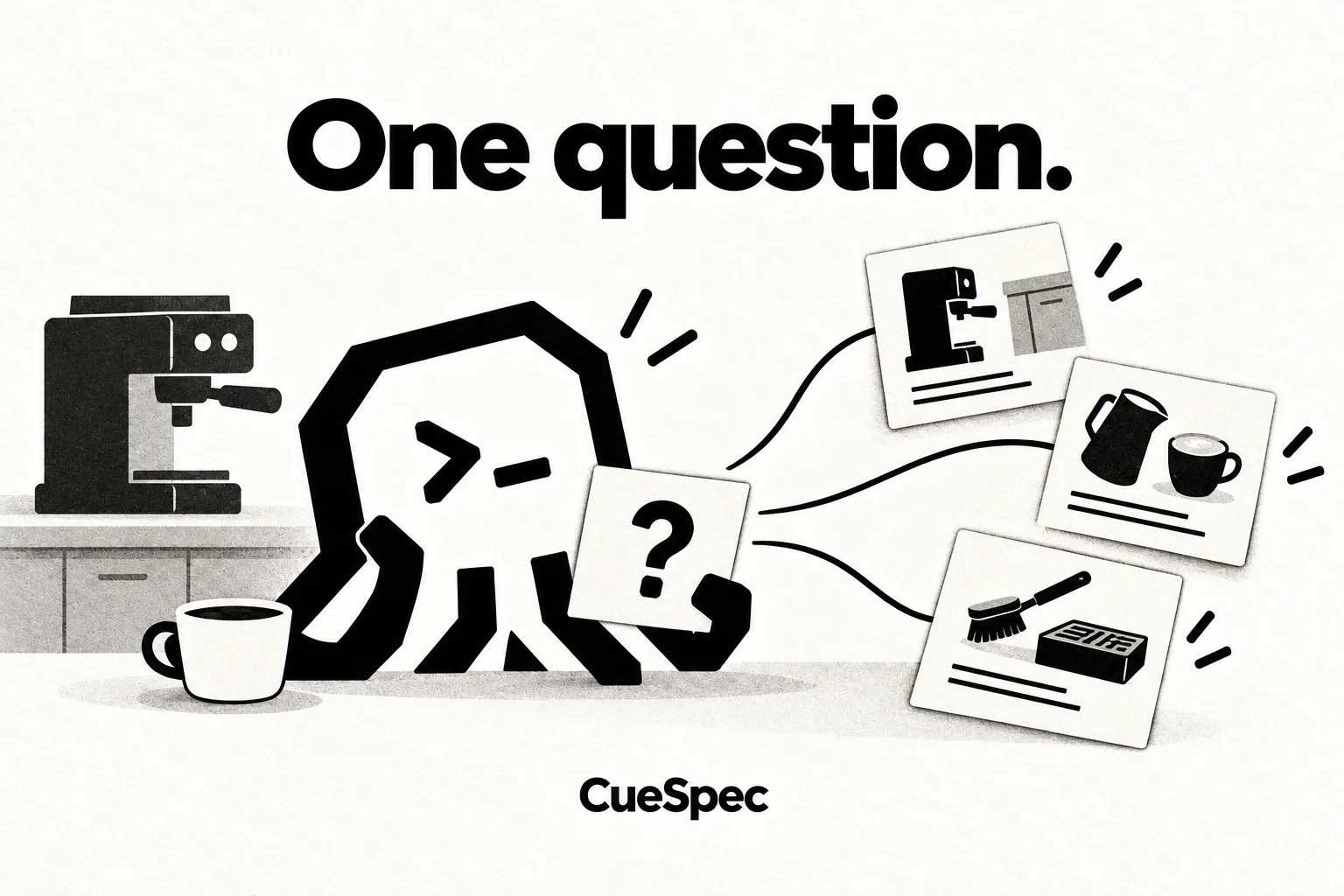
Imagine choosing your first coffee machine. Your kitchen is small, and you mostly want to make one milky coffee for yourself. You ask an AI search tool, “What kind should I buy?” A list of popular machines leaves plenty unanswered. Will one fit? How much work is the milk? What needs washing afterward?
A short question can contain several decisions. That is a useful starting point for understanding query fan-out—and for deciding what to put into an article someone might find through AI search.
How one question becomes several searches
Google explains that AI Overviews and AI Mode may use query fan-out. The model generates a set of related queries that can run concurrently, gathering information across subtopics and data sources to develop the response. Their models and techniques can differ. To qualify as a supporting link, a page must be indexed and eligible to appear in Search with a snippet; qualification doesn't guarantee appearance.
Think of helping a friend shop: you might investigate counter space, milk preparation, and cleaning separately before bringing useful findings together. That breakdown is an illustration, not a record of Google's internal queries.
There are distinct steps here: finding a page, using information from it, and displaying a supporting link. One question may call for several sources. Finding your page doesn't settle what the eventual answer will include.
Fan-out happens on the search side. Splitting an article into ten pages cannot tell us which ten questions a system will ask. A more useful editorial question is: how far could our existing article help this person make their decision?
What research on generative engine optimization found
Research on generative engine optimization (GEO) has compared different ways of writing. In their KDD 2024 paper, Pranjal Aggarwal, Vishvak Murahari and colleagues found that adding credible quotations, sources, or relevant statistics improved answer visibility more than stuffing in query keywords in their experiments. One measure in Table 1 weights cited text by its amount and position; keyword stuffing brought no improvement on that measure. The research tested how supplied material appeared in generated answers, without establishing that an edit improves a public webpage's chances of being retrieved through fan-out.
That distinction matters. Getting a coffee-machine manual found and helping an assistant explain a manual already in front of it are different jobs. Evidence about the second doesn't answer the first.
For an author, it is a reason to think carefully about supporting important facts. It isn't a reason to insert an unrelated number just to have a statistic. Someone trying to fit a machine into their kitchen needs relevant dimensions more than an impressive figure about the coffee industry.
Another clue comes from observing search outputs. In a 2025 preprint, Mahe Chen, Xiaoxuan Wang, Kaiwen Chen and Nick Koudas compared web-enabled AI outputs with Google Custom Search API results. They found limited overlap in the domains cited by AI and Google for the product queries they tested. From this observation, they recommended comparison tables, pros and cons, and explicit reasons for choosing. The formatting advice is an inference from August 2025 outputs; it wasn't tested by changing a page into a table and measuring its citations.
Would a table improve our coffee article? Look at what it helps readers distinguish. A column repeating “excellent quality” and “easy to use” adds little. Explaining tank removal, cleaning tasks, and which routines each option suits gives the format a purpose.
Start with the reader's unfinished decision
Research offers clues. The author still needs to decide what an individual article should answer.
Content strategist Chantal Smink's QPAFFCGMIM framework organizes content around audience needs, including questions, problems, alternatives, and goals. It is her content strategy method, not Google's classification of search queries.
You can use the idea without memorizing the acronym. Ask: what would this reader hate to discover after buying? What alternatives should they consider?
The first question might reveal an overlooked detail: a machine fits on the counter, but its water tank is awkward to remove. The second invites you to revisit the task itself: what coffee does the reader want, and how much daily effort are they willing to spend?
These questions need checking with real readers. They do, however, offer a way out of writing another paragraph of generic selling points.
Where these sources point together
These materials address different questions. Together, they suggest a useful writing direction: explain a real problem, supply meaningful details, make sources easy to find, and help people follow the discussion.
Google's current AI search optimization guide emphasizes distinctive, valuable content organized with helpful headings, paragraphs, and sections. It also warns against creating pages for query or fan-out variations primarily to manipulate rankings or generated responses.
That leaves an ordinary editorial decision. If tank removal takes one paragraph to explain, add it to the small-kitchen article. If a complete cleaning walkthrough needs several photographs and detailed instructions, a separate tutorial has a purpose for readers. Let the explanation determine the space it needs.
AI can help you find gaps. Give it an existing paragraph and a specific reader's situation, then ask, “What information would this person still need to decide?” Treat its suggestions as questions to investigate. Look for answers in manuals, conversations, or observations. The suggestions help shape your research; they don't supply the facts.
Turn a vague claim into useful guidance
Here is an illustrative rewrite, not a product review.
Before:
This compact coffee machine is easy to use and clean, making it ideal for milky coffees in a small kitchen.
After:
When choosing a machine for a small kitchen, check the space needed to refill it and remove parts, as well as its footprint. Find the model's dimensions and tank-removal instructions in its manual, then measure your counter and the space below the cupboards. Next, check the milk-cleaning instructions: which parts need washing after each use, and which need periodic maintenance? Thinking through those steps helps you judge whether it suits your morning.
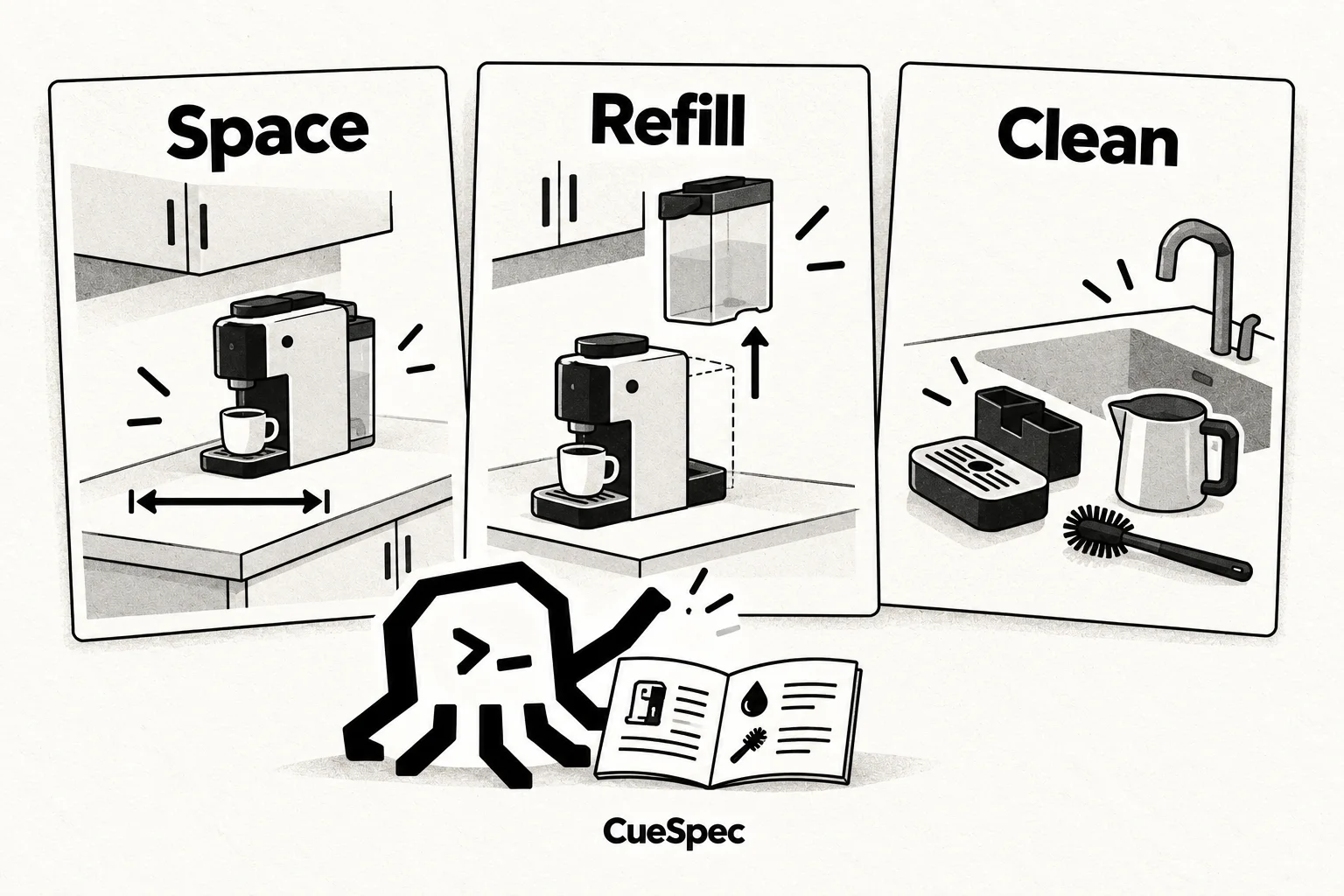
The second paragraph gives readers things to check and measure. For an article about a particular model, the next job is to add its actual dimensions and link the relevant manual beside them. For a cleaning account, explain what you actually tried. That work gives the article its substance.
Try this with a piece you already have. Circle a word such as “compact,” “efficient,” or “convenient.” Ask when it holds true and how a reader could judge it. Add the answer. The article gains useful information; whether the change improves adoption or citation in AI search needs separate observation.