
After AI Suggests a Bird Name, Listen to the City
Drafted and reviewed using AI assistance.
On this page
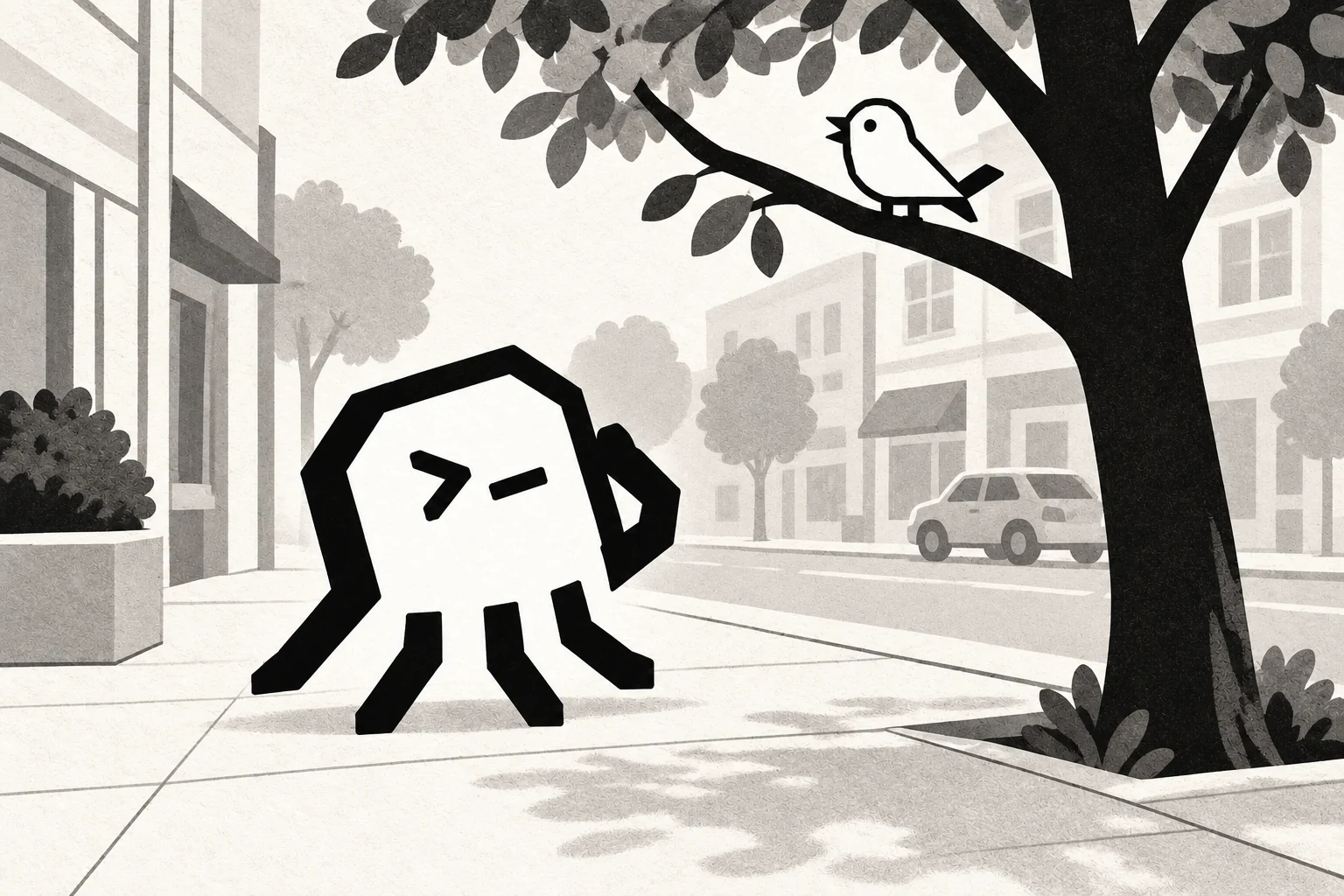
Listen to the bird and the city around it.
When birdsong sounds clearer on a walk, has the bird started singing louder? A study of white-crowned sparrows in the San Francisco Bay Area offers a surprising answer: the birds sang more softly, yet their songs could be heard farther away.
Elizabeth P. Derryberry, Jennifer N. Phillips and colleagues compared soundscapes and songs recorded before and during California's 2020 COVID-19 shutdown. Their paper, published in Science, reported lower urban noise levels and softer songs that could communicate farther and stand out more clearly. Coauthor David Luther explained in George Mason University's account that the quieter surroundings let the softer songs travel farther.
The background is part of what you hear
How loudly a bird sings and how clearly its song reaches a listener are different questions. A song has to compete with other sounds. Reduce the competing noise, and a softer song can become easier to hear.
Think of speaking quietly beside passing traffic versus in a quiet place. Your voice needn't get louder for someone to pick it out more easily. That everyday comparison can help you picture the role of the background.
Hearing more birdsong doesn't, by itself, mean there are more birds. The study concerned one species in a particular region during a particular change in 2020. It was a before-and-during comparison, not a randomized experiment or a prediction for every park today.
Keep listening after a name appears
On an ordinary walk, you could start with Cornell Lab's Merlin Sound ID. It uses machine learning to recognize shapes and patterns in spectrograms—visual representations of sound—and suggests possible species. Its reference recordings can help you connect a suggested name with the sound you're hearing. Suggestions can be wrong; they are a starting point for learning a voice.
Then spend a moment listening to the surroundings as well as the bird. What competes with the song? What becomes audible in a pause between passing cars? You can take an interest in that changing soundscape without trying to measure how loudly the bird is singing. Two casual phone recordings, with different distances or recording conditions, won't establish that change.
Later, you could bring the study's abstract to an AI conversation and ask it to explain three things together: the bird's own sound level, the background noise, and the range over which its song can be heard. On the next walk, the traffic around the bird becomes something to listen to, too.