
Reading Frost With AI: Two Roads and a Future Story
Drafted and reviewed using AI assistance.
On this page
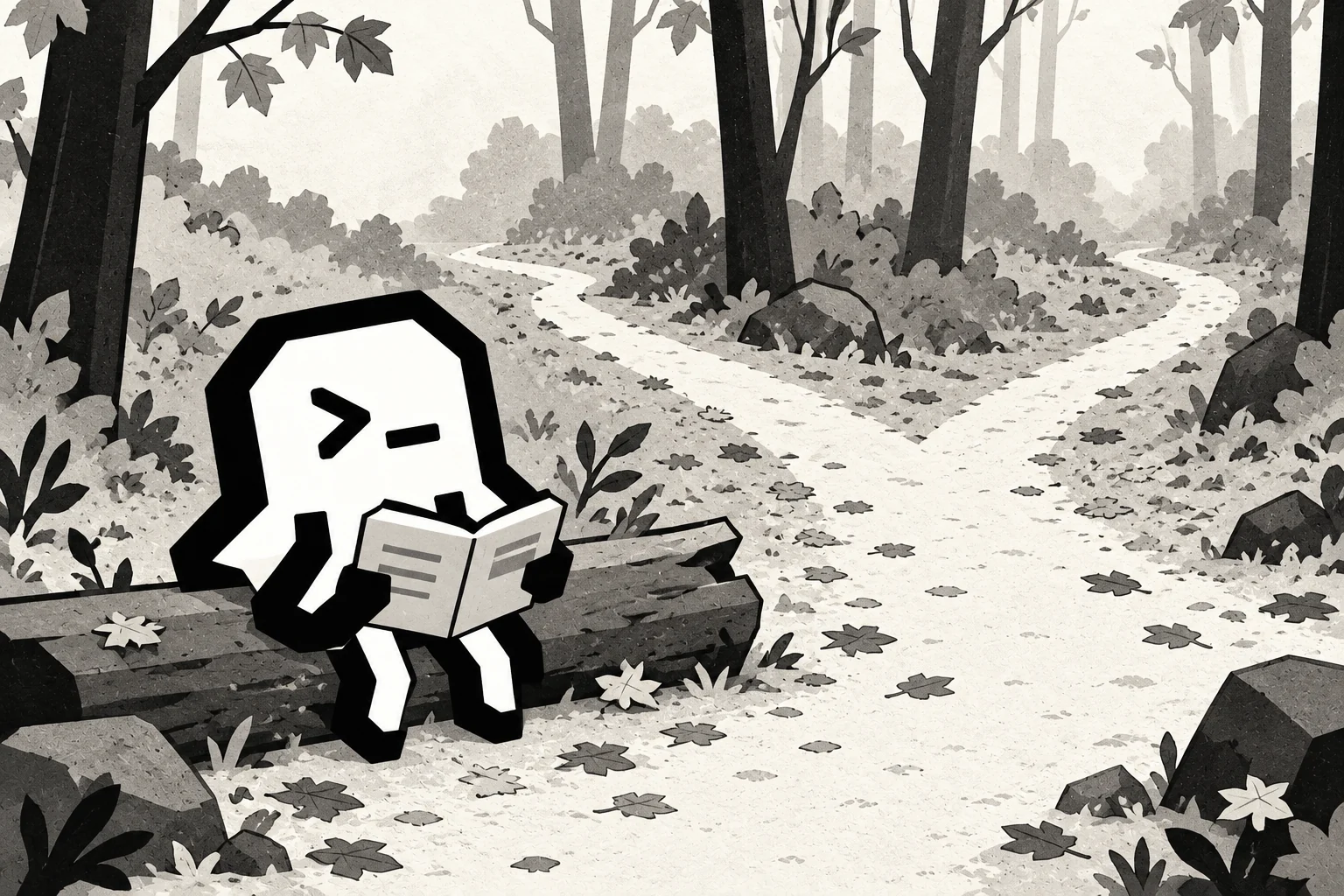
Two similar roads, and more than one way to read them.
Robert Frost's The Road Not Taken gives its traveler a frustratingly ordinary difficulty: two possible ways forward, and no way to travel both as one person. The speaker looks down one road until it bends out of sight. The poem allows a long pause, but not a view of where either choice will eventually lead.
Then the other road seems to have a claim: it is grassy and looks less worn. That distinction hardly has time to settle before the poem qualifies it. The roads have been worn “really about the same.” The next stanza says they “equally lay” in leaves that morning. The description keeps pulling back from a clear contrast between an ordinary route and a daring alternative.
That makes the final stanza more interesting. It begins “I shall be telling”: the speaker imagines recounting this choice far in the future. Within that anticipated story, the chosen road becomes the one “less traveled by.” The earlier account made the difference between the roads uncertain; the imagined retelling gives the choice a sharper outline.
One way to read the poem is to stay with the difficulty of returning. The speaker initially saves the other road for another day, then doubts that return will happen: one way leads to another. The two roads don't have to look dramatically different for choosing one to matter. Taking it begins a sequence that may make the other unavailable. On this reading, the poem makes room for the unchosen possibility without showing what it would have contained.
Another way is to listen to the story being prepared. Perhaps a later account will give a decisive shape to something that felt much less clear at the time. The choice can acquire meaning in the telling, even when its original grounds were uncertain. This reading needn't accuse the speaker of deliberately lying; it can attend to how a life becomes a story with a turning point.
These readings can sit beside one another. A decision may be hard to undo, and the account of it may change as someone looks back. The sigh in the final stanza doesn't settle the matter. It could carry regret, satisfaction, wistfulness or mixed feeling. Nor does the ending specify that the consequence was success. The poem leaves more room than a single lesson about choosing differently would allow.
If you'd like AI company while rereading, give it the complete poem from the source below. Let the discussion linger on the descriptions and the change in time, rather than asking for a one-sentence moral. One question is enough to begin:
How does the description of the roads at the fork sit with the story the speaker imagines telling later? Explore more than one reading of that change, leaving room for uncertainty about the sigh.